Quick Facts
| Dzongkha Name | སྤྱི་དགོན་བསམ་བསྟན་ཆོས་གླིང་དགོན་འཛིན་གྲྭ་ཚང་། |
|---|---|
| Name | Che Goen Samtencholing Goenzin Dratshang |
| Region | Western |
| Dzongkhag | Thimphu |
| Gewog | Geney |
| Open to non-Bhutanese | Yes |
| Visiting Hours | 7:00-17:00 |
| Entrance Fee | 00 |
| Elevation | 2634m |
| Walking Time | 0 |
| Established | 15th century |
| Main Statue / Relic | Future Buddha |
| Coordinates | 27.31149800, 89.59556600 |
| Festival | 9 month and 7th to 10th day of Bhutanese Calendar |
| Access | 15 minutes drive from Kharsuntse junction at the Thimphu-Phuentsholing Highway. The road is blacktopped. |
| Restroom | Yes |
| Contact | Chhimi (Chief Monk) – 17840845 |
History (Dzongkha)
༉ སྤྱི་གཞི་བསམ་་གཏན་ཆོས་གླིང་དགོན་པ།
དགེ་བསྙེན་ཁ་འགྱོ་སའི་སྣུམ་འཁོར་ལམ་ལྟག་ལུ་ཡོད་པའི་ སྤྱི་གཞི་བསམ་གཏན་ཆོས་གླིང་དགོན་པ་འདི་ རབ་བྱུང་༨ པའམ་ དུས་རབས་༡༥ པའི་ནང་ས་སྐྱའི་ངོར་ཆེན་ཀུན་དགའ་བཟང་པོའི་སློབ་བརྒྱུད་ ཕྲིན་ལས་རབ་ཡོངས་ཀྱིས་ ས་གནས་འདི་གི་དབྱིབས་ རྗེ་བཙུན་སྒྲོལ་མ་ཞབས་གཡས་བརྐྱངས་གཡོན་བསྐུམས་སྦེ་བཞུགས་པའི་བྷ་གའི་གུ་གདན་ས་བཏབ་གནང་བའི་ལོ་རྒྱུས་བཤད་ནི་འདུག། གཙུག་ལག་ཁང་གི་སྦོ་ལོགས་ཁར་ཡོད་པའི་ཙན་དན་ཤིང་གི་ནང་ ཙན་དན་གོ་ཤིརཱཟེར་བའི་ཙན་དན་ཤིང་མ་འདྲཝ་ཆིག་འདུག། དགོན་པ་འདི་ཁར་ རང་ཟླ་༨ པའི་ཚེས་༢༦ ལས་ ༣༠ ཚུན་ཉིན་གྲངས་ལྔ་གི་རིང་ ཚེས་བཅུ་འཆམ་དང་བཅས་གནང་སྲོལ་ཡོད་ཟེར་བཤདཔ་ཨིན་པས། ཆུ་འཛོམས་ལས་ཐིམ་ཕུ་འོང་སའི་སྣུམ་འཁོར་གཞུང་ལམ་ ས་གནས་ཁ་རི་གསུམ་བརྩེགས་སམ་ཅར་ཀི་ལོ་ཟེར་ས་ལས་ཡར་གཞུང་ལམ་གཡས་ཧོངས་ཀྱི་སྣུམ་འཁོར་གསེམ་ལམ་བདའ་སྟེ་ ཀི་ལོ་མི་ཊར་༦ ལྷགཔ་ཅིག་འགྱོཝ་ད་ སྣུམ་འཁོར་ལམ་གྱི་ལྟག་ལུ་ཡོད་པའི་དགོན་པ་འདི་ཁར་ལྷོདཔ་ཨིན།
History
Che Goen Samtencholing Goenzin Dratshang
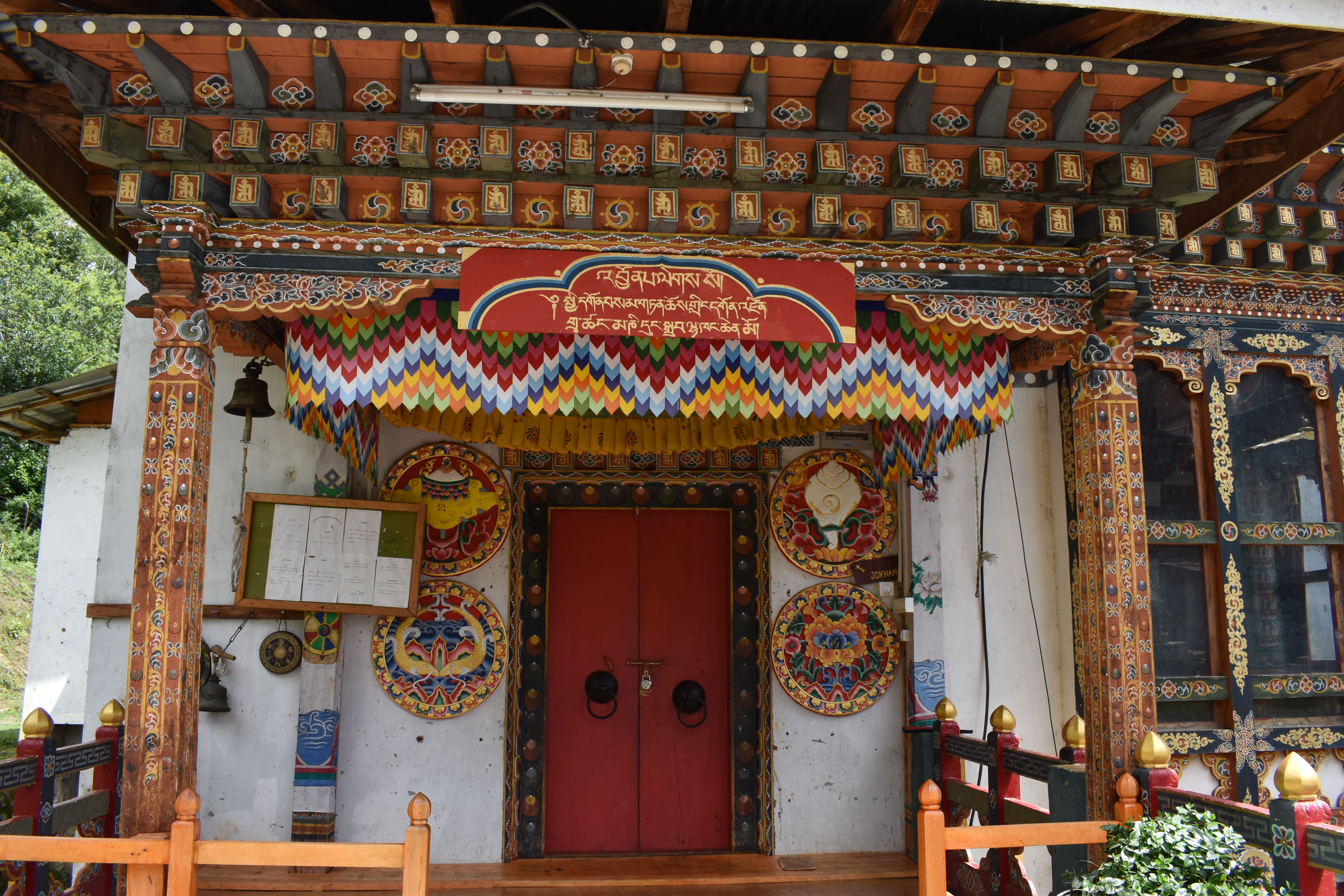
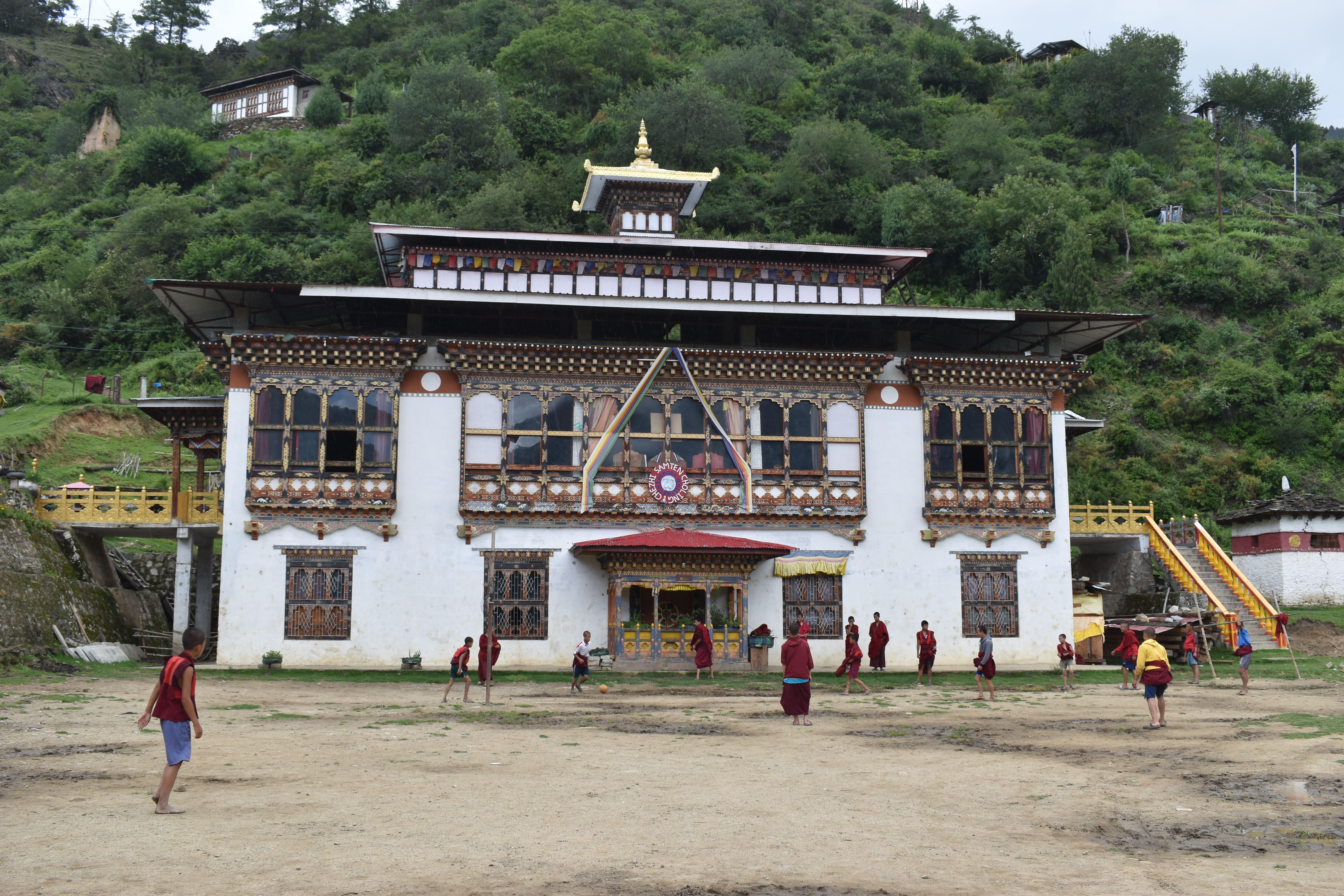
The monastery is located on the way above the roadside to Genekha. It was established by Thrinley Rabyong (linage of Shacha Ngyorchen Kuenga Zangpo). The monastery is believed to be built and formed unto the genital area of Goddess Jetsun Dema in the 15th Century or 8th Rabjung. One can find a unique cypress tree called Go-Shi-Ra near the monastery, where the festival is held for five days from 26th to 30th Day of the 8th Month of the Bhutanese Calendar annually. It is located around 6 kilometres from the right side of the Chhunzom to Thimphu highway, from the place called Kha Ri Sum Tse commonly known as Char Kilo.
Photo Gallery