Quick Facts
| Dzongkha Name | གོང་ཟ་གནས། |
|---|---|
| Name | Gongza Ney |
| Region | Eastern |
| Dzongkhag | Trashi Yangtse |
| Gewog | Toetsho |
| Open to non-Bhutanese | Yes |
| Visiting Hours | 8:00 AM to 5PM |
| Entrance Fee | Free |
| Elevation | 927m |
| Walking Time | Walk for 2 hours from Doksum |
| Established | 8th century |
| Main Statue / Relic | Guru Nangse Zeloen |
| Coordinates | 27.46640300, 91.61069900 |
| Festival | No |
| Access | Travel by car till Doksum |
| Restroom | Yes |
| Contact | Tshampa Dawa (Site Manager) – 17703821 |
History (Dzongkha)
གོང་ཟ་གནས་ དེ་ཡང་ ཨྱོན་གུ་རུ་རིན་པོ་ཆེ་བོད་ལས་ སྒོམ་ཕུག་སྐོར་རའི་བདུད་བཏུལ་ནིའི་དོན་ལུ་ རྟིང་བདའ་སྟེ་བྱོན་པའི་སྐབས་ཉིན་དགུང་ལུ་ས་གནས་འདི་ཁར་ཕེབས་ཏེ་ དགུང་ཇ་བཞེསཝ་ལས་ ས་གནས་ཀྱི་མིང་ཡང་དགུང་ཇ་ཟེར་འོང་ནི་ཨིན་རུང་ ཤུལ་ལས་སྒྲ་ཟུར་ཉམས་ཏེ་གོང་ཟ་ཟེར་དར་ཁྱབ་སོངམ་སྦེ་བཤད་ནི་འདུག།
ཁྱི་ཉལ་ཀརྨ་གྲུབ་ཆུའི་ཁྱིམ་ལས་ཐོབ་མི་ ད་ལྟོ་ཡོད་མི་གོང་ཟའི་གནས་ཡིག་དང་འཁྲིལ་ཤུལ་ལས་བཀའ་འགྱུར་བླམ་འགྱུར་མེད་ཀྱིས་ མཚམས་པ་ཟླ་བ་ལུ་གནས་བཤད་ཀྱི་རྒྱུན་མ་ཉམས་པར་གནས་བཤད་གཏང་བཞིན་དུ་འདུག།བཤགས་ཤིང་དགོན་པ་བཀའ་འགྱུར་བླམ་གིས་གོང་ཟའི་གནས་ཀྱི་སྐོར་ལས་ཁོ་རའི་ཡབ་སྐལ་བཟང་ཟེར་མི་ལས་གསན་ཡོདཔ་ཨིན་པས།མཚམས་པ་ཟླ་བ་གིས་ཁྱི་ཉལ་ལས་ཟོབ་མི་གནས་ཡིག་དང་བཀའ་བླ་མའི་ཞལ་རྒྱུན་གཉིས་རྟགས་མཐུན་མི་མཐུན་ཡང་བལྟ་ཡི་ཟེར་བཤད་ཅི།སྤྱི་ལོ་༡༩༩༣ ལས་གོང་ཟ་གནས་ལུ་ཟངས་མདོག་དཔལ་རིའི་ལྷ་ཁང་གཅིག་བཞེངས་ཏེ་ དུས་མཆོད་འབུམ་སྡེ་ཚུ་བཟུང་བཞིན་དུ་བདག་འཛིན་འཐབ་སྟེ་འདུག།
སྐྱེ་ལོ་༦༥ ལངས་མི་མཚམས་པ་ཟླ་བ་གིས་བཤད་སློལ་ལྟར་འབད་བ་ཅིན་ གནས་འདི་ག་གིས་ངོས་འཛིན་གནང་ཡོདཔ་ཨིན་ནའི་སྐོར་ཁ་གསལ་ཤེས་མི་མེད་དེ་འབད་རུང་ སྔོན་དང་ཕུ་ལས་རང་གུ་རུའི་སྦས་གནས་སྦེ་རང་བརྩི་སྟེ་འདུག་ཟེར་ཨིན་མས། གནས་འདི་ར་མཚན་ཆེ་ཏོག་ཏོ་ཅིག་སྦེ་ཡོད་ནི་འདི་གིས་ ད་རེས་ནངས་པར་མཇལ་བར་འོང་མི་ཚུ་གིས་ལྷག་པར་དུ་དད་མོས་བསྐྱེད་དེ་ ལོ་གཅིག་མང་སུ་འཐོན་དོ་ཡོདཔ་སྦེ་བཤདཔ་ཨིན་པས།
དེ་ཡང་ཨྱོན་གུ་རུ་གིས་ གོང་ཟ་གནས་ལུ་ལྷོད་ཚད་ཅིགཔོ་ཁམས་གསུམ་འཁོར་བ་ལས་ཐར་བའི་ཐུགས་སྨོན་གནང་བའི་བརྡ་མཚོན་ལུ་ཨིནམ་སྦེ་བཤདཔ་ཨིན།
དེ་ལས་ ལྷ་ཁང་ནང་གི་བྱག་གུ་ ཞི་བའི་ལྷ་ཚོགས་༤༢ དང་ཁྲོ་བོའི་ལྷ་ཚོགས་༥༨ ཚུ་ཡོདཔ་སྦེ་བཤདཔ་ཨིན།
དེ་ལས་ འཇམ་དབྱངས་ཕྱག་རྡོར་སྤྱན་རས་གཟིགས་གསུམ་གྱི་ཚུལ་ལུ་རྡོ་ཕུ་སྦོམ་གསུམ་ལྷ་ཁང་རྒྱབ་ཁར་ཆུའི་འགོ་ཁ་ཐུག་ལུ་ཡོད། རིགས་གསུམ་མགོན་པོའི་ཚུལ་གྱི་རྡོ་ཕུ་གི་གདོང་ཕྱོགས་ལས་གྲུབ་ཆུ་ཁག་གསུམ་དང་གུ་རུའི་གྲུབ་ཆུ་གཅིག་བཅས་བཞི་ཡོད།
ཁམས་དྭངས་ལས་ཨིན་མི་མཚམས་པ་ཟླ་བ་འདི་དགུང་ལོ་༦༥ དང་ མཚམས་པ་འདི་སྤྱི་ལོ་༡༩༨༦ ལས་ཨ་བརྒྱ་ལུ་ལོ་གསུམ་མཚམས་བཅད་དེ་བཞུགས་མི་ཅིག་ཨིནམ་མ་ཚད་ དེ་གི་ཤུལ་ལས་རིགས་གསུམ་དགོན་པ་ལུ་ལོ་ལྔ་མཚམས་ལུ་བཞུགས་པའི་ཤུལ་ལུ་ད་རུང་ཨ་བརྒྱ་ལུ་ལོ་དག་པ་ཅིག་བཞུགས་ནུག། དེ་ལས་ད་ལྟོའི་ས་གནས་གོང་ཟ་གནས་ལུ་བཞུགས་ཏེ་ལོ་༡༥ ཙམ་ལོན་ཡོདཔ་ད་ གོང་ཟ་གནས་ལུ་ལོ་བསྟར་དུས་མཆོད་འབུམ་སྡེ་བཟུང་ནི་ཚུ་ཁྱི་ཉལ་གཡུས་ཚན་དང་གཞན་དད་མོས་ཅན་ཚུ་གིས་སྦྱིན་བདག་འབད་དེ་ཞབས་ཏོག་ཞུཝ་བཞིན་དུ་དེའི་འགོ་འདྲེན་ཚུ་ཡང་མཚམས་པ་རང་གིས་འཐབ་སྟེ་བསྟན་པ་འཛིན་སྐྱོང་སྤེལ་གསུམ་ལུ་ཕྱག་ཞུ་བཞིན་ཡོད་ཟེར་བཤད་ཡོདཔ་ཨིན།
གོང་ཟ་༼དགུང་ཇ༽ གནས་མཇལ་ནིའི་དུས་ཚོད་འདི་འབྲུག་ཟླ་ ༩ པ་ལས་ ༣ པ་ཚུན་གྱི་ནང་འཁོད་ལུ་འབད་བ་ཅིན་ཆུའི་མཐའ་མའི་གནས་ཚུ་ཡང་ལེགས་ཤོམ་སྦེ་མཇལ་ཚུགསཔ་ལས་གོང་ག་དུས་ཚོད་དེ་གནས་མཇལ་ནིའི་དུས་ཚོད་ལེགས་ཤོམ་ཅིག་ཨིན་པས།
History
Guru Rimpoche arrived at what is today known as Gongza Ney while following and chasing the evil Nyonpa which was later subdued at Gomphu Kora. Guru reached here at noon and had his noon tea, Gungja (དགུང་ཇ). Therefore, the place came to be known as Gungja- the place where Guru Rimpoche had his Noon Tea. Later, over the years, the name got corrupted into Gongza.
A pilgrimage guide to Gungja Ney was recovered from Karma Drupchu’s house in Khenyel. Lama Jurme of Shakshing Kanjur Goenpa explained all these guides to one Tshampa Dawala to maintain the continuity. Lama Jurmey had already heard from his father Lam Kelzang. Tshampa Dawala compared these two sources and verified them.
In 1993, a zangdopelri temple was constructed and this has helped greatly in enabling the people to host and conduct rituals and festivals.
According to Tshampa Dawala, 65, from Khamdang, it is not clear who discovered this Gungja Ney, but since times immemorial, people have been having a deep faith that it is the blessed hidden site of Guru Rimpoche. Its location is awestriking and appears so splendid that people feel their faith and devotion only increasing. More and more people are now paying their visit to this holy site. This is taken as a sign that Guru’s prayers to liberate all those who visit this site is coming to fruition.
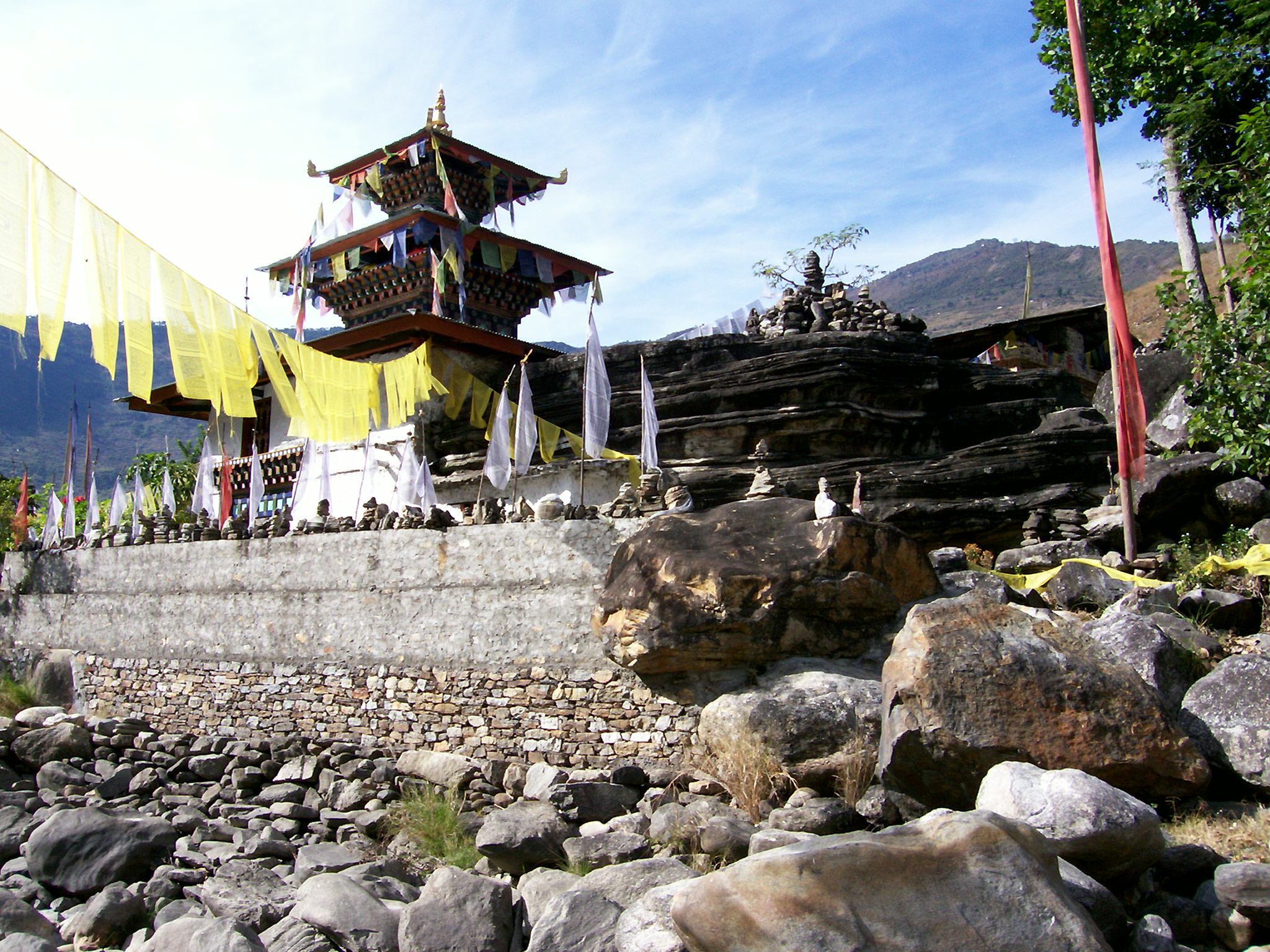
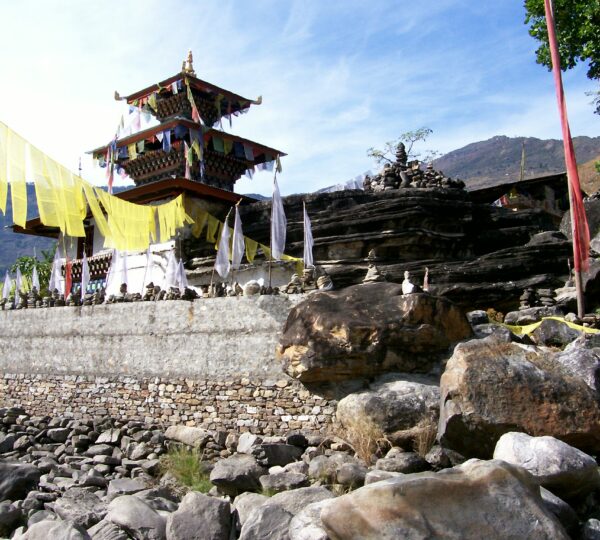
On the face of the cliff where Gungja Ney Temple perches, there are 42 images of peaceful gods and 58 images of wrathful gods.
Behind the temple, there are also three big stones resembling Jampelyang, Chana Dorji and Chenrezig, collectively known as Rigsum Goenpo and below each of them flows a stream. Another stream is known as Guru’s drubchu also flows nearby making four streams.
Tshampa Dawala stayed in retreat for three years starting from 1986, 5 years in Rigsum Goenpa, and again some years in Aaja Ney. This is his 15th year in Gungja Ney.
Observing anniversaries and recitations (དུས་མཆོད་འབུམ་སྡེ) are collectively done by the community of Khenyel with support from others under the coordination of Tshampa Dawala to manage, administer and propagate Buddha dharma.
The right time to visit Gungja Ney is between October and April. At this time, the water level would have gone down and sacred sites and objects along the river banks can also be seen.
Gungja Ney under Toedtsho gewog in Trashi Yangtse is located near the Gongri (Dangme Chhu) a 2 hours walk from Doksum.
Photo Gallery