Quick Facts
| Dzongkha Name | ཟླུམ་བརྩེགས་ལྷ་ཁང་། |
|---|---|
| Name | Dungtse Lhakhang |
| Region | Western |
| Dzongkhag | Paro |
| Gewog | Dopshari |
| Open to non-Bhutanese | Yes |
| Visiting Hours | 08:00 – 17:00 |
| Entrance Fee | No |
| Elevation | 2275m |
| Walking Time | 0 |
| Established | 15th century |
| Main Statue / Relic | Drupthob Thangtong Gyalpo |
| Coordinates | 27.43520300, 89.41349700 |
| Festival | No |
| Access | Travel by a car. |
| Accommodation | Hotel available near by town. |
| Restroom | Yes |
| Contact | Lam Tashi Namgay (Site Manager) – 17669828 |
History (Dzongkha)
༉ རིན་སྤུངས་ཆ་འདུས་ ཤར་རི་རྒེད་འོག་ གྱང་ས་གཡུས་ཚན་ལུ་ཆགས་ཡོད་མི་བཟླུམ་བརྩེགས་ལྷ་ཁང་དེ་ དུས་རབས་༡༥ པ་ནང་ གྲུབ་ཆེན་ཐང་སྟོང་རྒྱལ་པོ་མཆོག་ནས་གདན་ས་བཅགས་གནང་ནུག།
དེ་སྦེ་ལྷ་ཁང་བཞེངས་དགོ་མི་འདི་ཡང་ སྤ་རོ་ལུང་པའི་ས་གནས་མང་ཤོས་ཅིག་ནང་ལུ་ ས་བདག་ཀླུའི་གནོད་པ་རྒྱ་ཆེ་དྲག་སྦེ་འཐོན་ཡོདཔ་མ་ཚད་ ལྷག་པར་དུ་ ས་གྲུ་༣ དང་གནམ་གྲུ་༣ ཕོགས་པའི་ གྱང་སར་གཡུས་ཚན་ནང་ལུ་ ས་བདག་ཀླུའི་གནོད་པ་སྦོམ་སྦེ་རང་བྱུང་དོ་ཡོདཔ་སྦེ་གཟིགས་ཡོདཔ་ཨིན་པས།
དེ་ཡང་ ད་ལྟོ་ཟླུམ་བརྩེགས་ལྷ་ཁང་ཡོད་སའི་ རི་འདི་ ས་བདག་གི་ཁ་དང་ལྷ་པ་གི་རྣམ་པ་སྦེ་ཡོད་པའི་རི་མཇུག་འདི་ ར་མ་ཁ་གི་གཡུས་ཚན་ནང་ལུ་ཕོག་ཡོད་མི་འདི་ སྦལཔ་ངོ་མ་བཟུམ་སྦེ་མཐོང་དོ་ཡོད་མི་དེ་གིས་ རྟགས་མཚན་ངན་པ་གཟིགས་ཡོདཔ་ལས་ དེའི་ཁ་གནོན་དང་ ས་བདག་གི་གནོད་པ་བཟློག་ཐབས་ལུ་ གྲུབ་ཐོབ་མཆོག་ནས་མཆོད་རྟེན་དབྱིབས་ ཟླུམ་བརྩེགས་ཀྱི་རྣམ་པ་སྦེ་བཞེངས་ཡོདཔ་ཨིན་པས།
དེ་གི་ཤུལ་ལས་ སྒོ་རི་རྗེ་ཤེས་རབ་རྒྱལ་མཚན་མཆོག་ནས་ མཆོད་རྟེན་དེའི་མཐའ་འཁོར་ལུ་ཡོད་པའི་ཟུར་གཤག་ཚུ་བཞེངས་ཏེ་ ལྷ་ཁང་ཟེར་མི་མཚན་དེ་ དུས་རབས་༡༧ འདེ་ཅིག་ལུ་དར་ཁྱབ་འགྱོ་ནུག་ ཟླུམ་བརྩེགས་ལྷ་ཁང་དེ་ཐོག་༣ མ་སྦེ་ཡོདཔ་དང་ དེ་ནང་ཡོད་པའི་སྐུ་རྟེན་ཚུ་ཡང་ ལྷ་ཁང་ཐོག་དང་པ་ནང་ གྲུབ་ཐོབ་གསུང་བྱོན་མའི་སྐུ་དང་ རྗེ་བཙུན་མི་ལ་རས་པ་ དེ་ལས་ ཇོ་བོ་ཛམྦྷ་ལྷ་དང་ རྡོ་རྗེ་ཆང་གི་སྐུ་འདྲ་ཚུ་བཞུགས་ཡོདཔ་དང་ ཐོག་བར་མ་ནང་ལུ་ ནུབ་ཁ་ཐུག་རྟ་མགྲིན་ཡབ་ཡུམ་ ལྷོ་ཁ་ཐུག་མགོན་པོ་ཚེ་དཔག་མེད་ བྱང་ཁ་ཐུག་ལུ་ཤཱཀྱ་ཐུབ་པ་སྦེ་གསུམ་ཡོདཔ་དང་ ལྷ་ཁང་ཐོག་འོག་མ་ནང་ལུ་ ཤར་ཁ་ཐུག་ཆོས་ལོངས་སྤྲུལ་གསུམ་༼གྲུབ་ཐོབ་ཐང་མཐོང་རྒྱལ་པོ་ བསྟན་པ་དང་ གུ་རུ༽ ལྷོ་ཁ་ཐུག་སྤྱན་རས་གཟིགས་ ཀུན་མཁྱེན་པདྨ་དཀརཔོ་དང་སྐྱབས་དགོན་ངག་དབང་རྣམ་རྒྱལ་གསུམ་དང་ བྱང་ཁ་ཐུག་ཕྱག་ན་རྡོ་རྗེ་དང་ ནུབ་ཁ་ཐུག་རྡོར་སེམས་ཡབ་ཡུམ་བཅས་བཞུགས་ཡོདཔ་ཨིན།
སྐུ༌འདྲ༌འདི༌ཚུ༌ག༌ར༌གྲུབ༌ཐོབ༌ཁོ༌ར༌བཞུགས༌པའིསྒང༌ལས༌ཡོད༌པའི༌སྐུ༌རྟེན༌བྱིན༌ཅན༌ཙང༌ཙ༌རང༌ཡོདཔ༌ཨིན༌མས།དེ་ལས་ལྷ༌ཁང༌ནང༌ན༌གི་ལྡེབ་རིས་ཚུ་ཡང་ཡ་མཚན་ཆེ་ཏོག་ཏོ་སྦེ་བོད༌ཀྱི༌ལྷ༌ཁང༌ཚུ༌དང༌དབྱེ༌བ༌མེདཔ༌སྦེ༌ཡོདཔ་ཨིན་ ལྷ་ཁང་དེ་གནམ་ལོ་༢༠༡༨ ལུ་ལྷ་ཁང་ནང་ན་གི་ལྡེབ་རིས་དང་ ཤིང་ཆས་རིགས་ཚུ་ཉམས་ཆག་ཤོར་ལུས་མི་ཚུ་ མི་དབང་རྒྱལ་ཡུམ་ཨ་ཞེ་སྐལ་བཟང་ཆོས་སྒྲོན་དབང་ཕྱུག་མཆོག་གིས་ཉམས་གསོ་སྦོམ་སྦེ་ར་ཞུ་ཡོདཔ་མ་ཚད་ ཉེ་འདབས་ཀྱི་ས་གནས་ཡང་རྒྱ་བསྐྱེད་འབད་དེ་ སྔར་བ་ལྷགཔ་སྦེ་མཛེས་ཏོག་ཏོ་བཟོ་ཡོདཔ་ལས་ ད་ལྟོ་ཟླུམས་བརྩེགས་ལྷ་ཁང་དེ་ ཕྱི་ནང་གཉིས་ཆ་ར་མཛེས་ཆ་དང་ལྡནམ་སྦེ་མཇལ་ཚུགས་མི༌འདི༌ མི༌དབང༌རྒྱལ༌ཡུམ༌ ཨ༌ཞེ༌སྐལ༌བཟང༌ཆོས༌སྒྲོན༌དབང༌ཕྱུག༌མཆོག༌གི༌ སྐུ༌དང༌གྲིབ༌མ༌ལས༌ཉག་ཅིག་ལས་བརྟེན༌ཏེ་ཨིན༌ཟེར༌ཞུ༌ནི།།
History
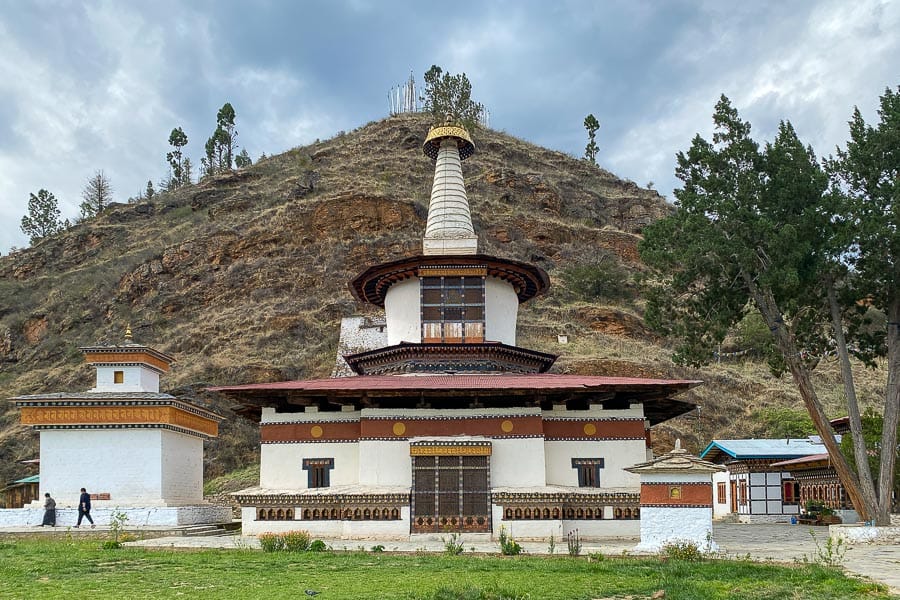
The Iron Bridge Builder Drupthob Thangtong Gyalpo built the monastery located beside a road at Jangsa village in the 15th Century. When Thangtong Gyalpo, the great adept visited Paro, he found that the place between Pachu and Dochu was plagued with leprosy. The cause of it he found was the Taktshang mountain ridge ending in this village which bears the shape of the poisonous snake descending onto the valley. It also resembled a frog lying on its belly with its right arm in the village of Ramakha and the left arm planted in Jangsar village with its nose and mouth projecting directly into the area where the temple stands today. In order to nullify the negative effect of this frog-like ridge the master built this temple. It is said that the number of leprosy patients started to decline soon thereafter. Je Khenpo Sherab Gyalstshen expanded it and changed its name from Choeten to lhangkhang from 17 century.
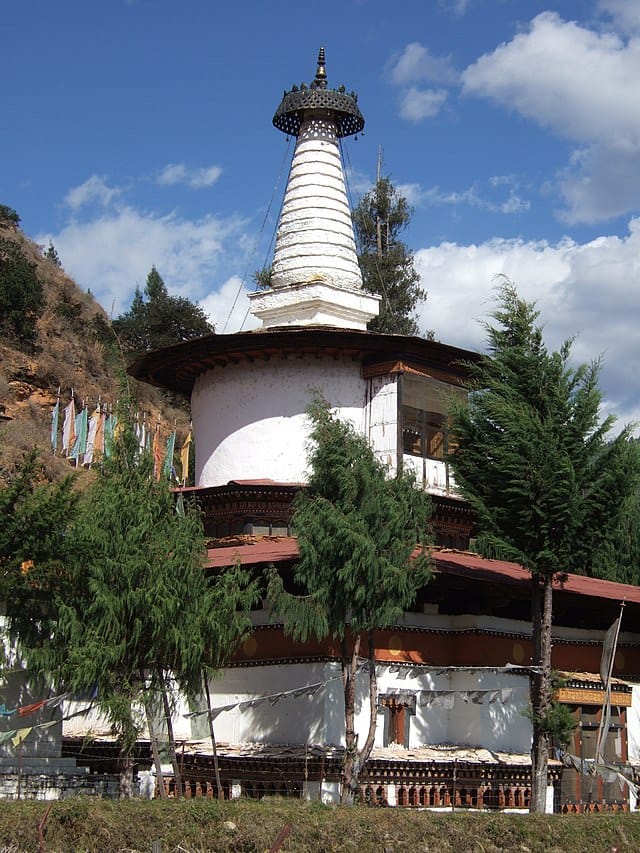
1. The temple has a central axle-pile (Sokshing/Central channel) running through the middle from the ground below to the crest of the stupa. The square base houses the first temple, the middle floor the second temple and the vase or the dome, the third temple.
2. The temple at the base has four doors facing the four directions.
3. The middle temple has four windows facing the four directions.
4. The temple on top has no windows but a balcony facing south.
5. The harmika on top of the dome including the conical spire of thirteen tapering steps, parasol and the pinnacle are all made of brass and held in place by four iron chains from four directions. The stupa bears the shape of Endhum Chorten and is 63feet from the ground to the crest.
6. The cave behind the temple is called Lhamoi Neykhang and it is where the master mediated. During his meditation lasting for three continues months he saw Avalokiteswara or chenrezig appear before him.
7 The temple is built purely of stone with beams resting on twelve huge pillars. Each of the pillars was donated by different villages in Paro.
The Khazang chorten to the right of the temple was built by the Royal Grandmother Ashi Kezang Choden Wangchuk in the middle of the 20th century. The Mani Dungkhor and the water prayer wheel next to it were built from early on.
Photo Gallery