Quick Facts
| Dzongkha Name | བྱམས་པ་ལྷ་ཁང་། |
|---|---|
| Name | Jampa Lhakhang |
| Region | Central |
| Dzongkhag | Bumthang |
| Gewog | Chamkhar Throm |
| Open to non-Bhutanese | Yes |
| Visiting Hours | 6:00AM to 6:00 PM |
| Entrance Fee | Free |
| Elevation | 2594m |
| Walking Time | 0 |
| Established | 7th century |
| Main Statue / Relic | Jampa Goenpo |
| Coordinates | 27.57571000, 90.73346300 |
| Festival | Jampa Lhakhang Drub. |
| Access | Travel by car |
| Restroom | Yes |
| Contact | Sonam Jamtsho (Site Manager) – 17491639 |
History (Dzongkha)
བུམ་ཐང་བྱམས་པ་ལྷ་ཁང་འདི་ སྤྱི་ལོ་༦༥༩ལུ་བོད་ཀྱི་རྒྱལ་པོ་སྲོང་བཙན་སྒམ་པོ་གིས་ ཧི་མ་ལ་ཡའི་གངས་ལྗོངས་སུ་ནང་པའི་ཆོས་ལུ་བར་ཆད་རྐྱབ་མི་འདྲེ་སྲིན་ཚུ་དམ་བཏགས་ཐབས་ལུ་ མཐའ་འདུལ་ཡང་འདུལ་འབད་ ཉིནམ་གཅིག་ནང་ ལྷ་ཁང་༡༠༨ བཞེངས་ཡོད་པའི་གྲལ་ སྤ་རོ་སྐྱིད་ཆུ་ལྷ་ཁང་དང་དུས་མཉམ་བཞེངས་ཡོདཔ་ཨིན་པས།
གུ་རུ་རིན་པོ་ཆེ་མཆོག་གིས་ ལྷ་ཁང་འདི་ནང་ཚར་མང་རབས་ཅིག་ཞབས་ཀྱིས་བཅགས་ཏེ་ བྱིན་གྱིས་རླབས་པའི་གནས་ཁྱད་པར་ཅན་ཨིན་པའི་ཁར་ ལྕགས་མཁར་རྒྱལ་པོ་གིས་ཡང་ གུ་རུ་རིན་པོ་ཆེ་གིས་ ཁོ་སྲོག་སྐྱབས་མཛད་པའི་བཀྲིན་ལུ་ དུས་རབས་༨པའི་ནང་ཉམས་གསོ་ཞུ་ཡོདཔ་ཨིན་པས། ལྷ་ཁང་འདི་ནང་ དུས་གསུམ་རྟག་པའི་རྡོའི་བསྐལ་པའི་ཐེམ་སྐས་གསུམ་ལས་ དུས་ད་ལྟའི་ཐེམ་སྐས་ས་འོག་ཐིམ་པ་ཅིན་བསོད་ནམས་ཉམས་ ལྷ་ཚུ་ཡང་མི་ལུ་གྱུར་ འཛམ་གླིང་གི་བསྟན་པ་ཡང་ནུབ་ནི་ཨིན་པའི་ཡིད་ཆེས་འདུག
ནང་རྟེན་གཙོ་བོ་ རྒྱལ་ཚབ་བྱམས་པ་མགོན་པོ་བཞུགས་པ་ལས་ ལྷ་ཁང་གི་མཚན་ཡང་བྱམས་པ་ལྷ་ཁང་ཟེར་ཞུཝ་ཨིནམ་དང་ རྟེན་གཞན་ཡང་སྤྱི་ལོ་༡༨༨༧ལུ་ གོང་ས་ཨྱོན་དབང་ཕྱུག་གིས་བཞེངས་གནང་མི་ དཔལ་དུས་ཀྱི་འཁོར་ལོའི་ལྷ་ཚོགས་བཞུགས་ཡོདཔ་ཨིན་པས། ལོ་བསྟར་ཆོས་ཕྱོགས་ཀྱི་ལས་རིམ་གྲལ་ལས་རྩ་ཆེ་ཤོས་ ཉིན་གྲངས་ལྔའི་རིང་གནང་སྲོལ་ཡོད་མི་ བྱམས་པ་ལྷ་ཁང་སྒྲུབ་ཟེར་ འདིའི་སྐབས་ཕྱི་རུ་ མེ་འཆམ་དང་བཅས་ གཏེར་འཆམ་ཟེར་སྒྱེན་མོ་འབད་ སྐུ་འཆམ་གནང་མི་འདི་ མཇལ་ཁ་ཞུ་བར་མི་ལེ་ཤ་སྤུངས་འཛོམས་འབདཝ་ཨིན་མས།
History
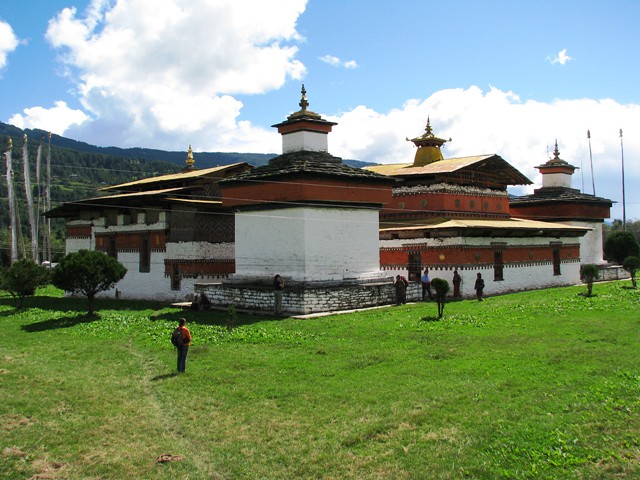
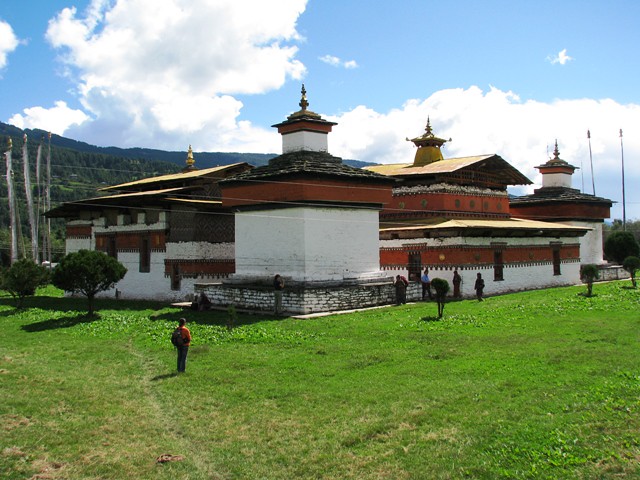
Jambay lhakhang was built in 659 AD by the Tibetan King Songtsen Gampo, in the same day as the Kyichu Lhakhang in Paro and 106 other lhakhangs in Tibet and in other parts of hte Himalayan region to subdue a demoness.
Guru Rinpoche(Precious Master) visited the site several times and deemed it exceptiionally sacred. Chakhar Gyab, the King, who resided in the Iron Castle of Bumthang renovated the temple in the 8th century AD after Guru restored his life force.
The main temple houses three stone steps representing the three ages of the Past, the Present and the Future. It is believed that when the step representing the Present age sinks to the ground level, the gods will become like humans and herald the end of the Present world.
The main relics include the future Buddha, Jowo Jampa(Maitreya), after which the temple derived its current name, besides, it houses more than a hundred statues of the gods of Kalachakra built by the first king in 1887.
The lhakhang hosts one of the most spectacular festivals in the country called Jambay lhakhang Drup (commemoration). The festival lasts for five days and its highlight is the fire ritual held in the evening where crowds gather to witness the ritualistic Terma(naked) dance.
Photo Gallery